

Final Fantasy 16 Review of Its Action Combat and Story

Yuto Gameguide
JRPG & Visual Novel Guide Writer · July 29, 2026
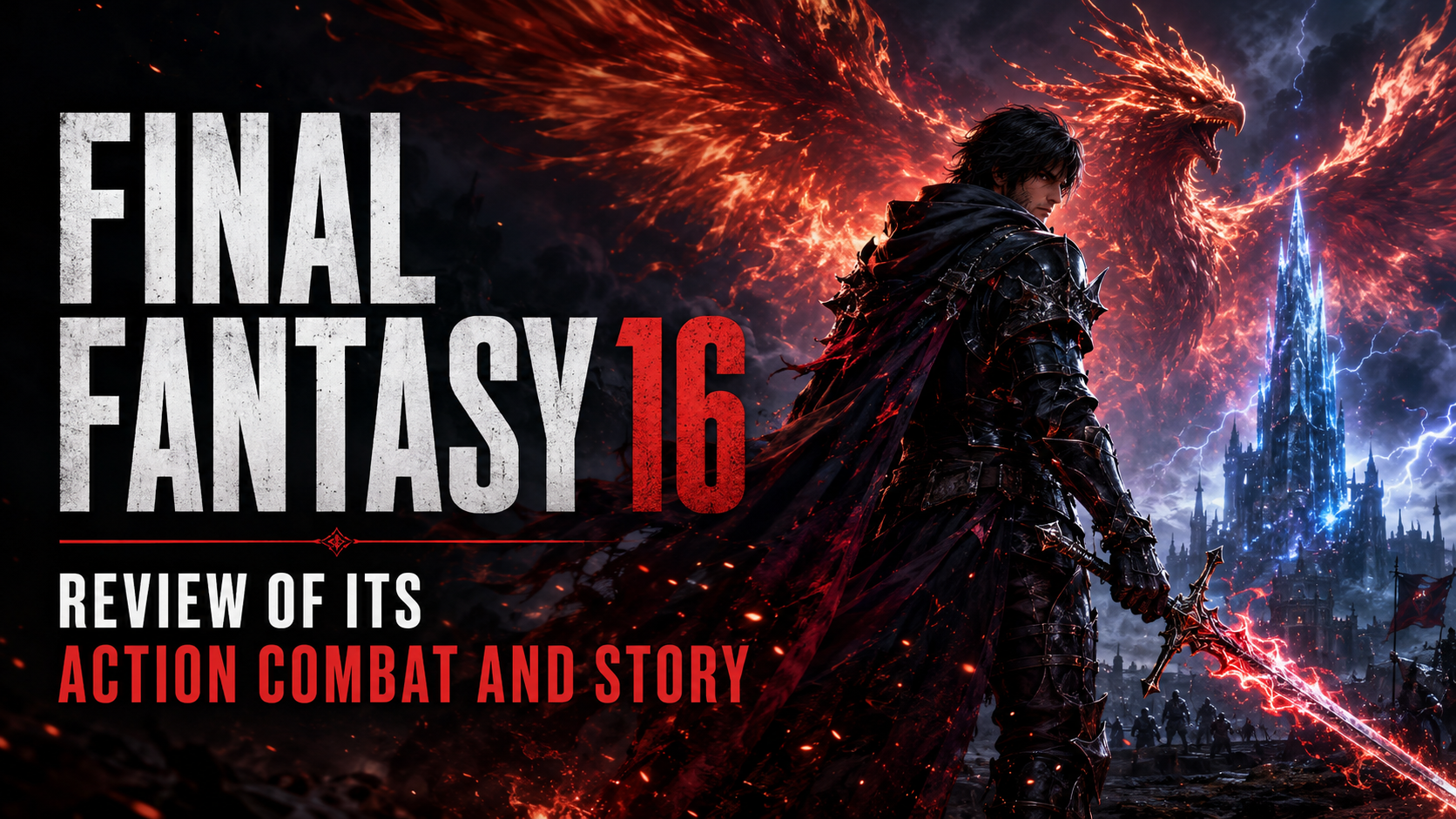
Final Fantasy 16 marks a real turning point for the series, dropping the traditional turn based systems entirely in favor of real time action built around fast combat and large scale spectacle. This review covers the combat system, Clive Rosfield's story, the Eikon battles that serve as the game's signature moments, and the parts that longtime fans of traditional Final Fantasy might not love. By the end you will have a clear sense of whether this entry fits your taste before deciding to pick it up yourself.
Why Final Fantasy 16 Dropped Turn Based Combat Entirely
The clearest change here is the combat system. Where the series has mixed turn based and semi real time systems for decades, this entry goes fully real time action, with the player controlling a single character for the whole game. It leans on combos, dodging on reaction, and special moves tied to the Eikon powers Clive carries, so it feels closer to an action game than a traditional JRPG. That shift will appeal to players chasing fast, satisfying combat, but it is also exactly why some longtime fans feel this entry departs quite far from the Final Fantasy they grew up with.
Clive Rosfield and a Political Story Darker Than Past Entries
Protagonist Clive Rosfield pulls the player into political conflict between nations across the world of Valisthea, all tied to the power of Mothercrystals and the Eikons bound to them. The story plays out with a serious, often bleak tone that goes further than most earlier entries, filled with heavy dramatic beats and real sacrifice. That gives Final Fantasy 16 a distinctly more mature feel overall, and the cast surrounding Clive is written with clear motivations and personal baggage of their own rather than simply existing to support the lead character.
The Eikon Battles Are the Game's Most Memorable Moments
The part most people talk about is the battles between Eikons, where characters transform into giant beasts and clash head on. These sequences are staged like a blockbuster action film, with camera work and scale clearly built to be the game's highlight moments. Unlike the close range combo focused fighting elsewhere, Eikon battles shift the pace entirely, making it feel like a different game for the duration, which is exactly what sets Final Fantasy 16 apart from other action games on the market right now.
Want to see another gacha style JRPG series, read the Persona games ranked article next.
How the Soundtrack and Presentation Round Out the Package
Beyond combat and story, the presentation deserves credit on its own. The score leans heavily into orchestral and rock arrangements that swell during the biggest Eikon clashes, doing a lot of work to sell the scale of those fights. Cutscene direction throughout the game is close to cinematic quality, with facial animation and voice acting carrying the heavier emotional scenes convincingly. Load times and performance stayed solid across the playthrough on the platforms tested, which matters more than it sounds for a game this heavy on scripted set pieces, since any stutter during a big moment would undercut the spectacle the whole game is built around.
What Longtime Fans of Traditional Final Fantasy Might Not Love
Even with all the praise the combat gets, some parts of the game may feel unfamiliar to longtime fans. There is no party system to switch between characters like earlier entries, since you control Clive alone for the whole game. Exploration is also fairly linear compared to the open world JRPGs common today, and some side content leans on repeated patterns rather than real variety. If you loved past Final Fantasy games for their party systems and freedom to explore, you may need to adjust your expectations before starting this entry.
Follow the upcoming JRPG news roundup here for more.
How the Side Content and Difficulty Options Hold Up
Beyond the main story, Final Fantasy 16 offers hunts, which are essentially bounty style boss fights scattered across the map, along with a New Game Plus mode and a harder difficulty setting for players who find the base game too forgiving once they have learned its combat rhythm. The hunts are a highlight for players who enjoyed the Eikon battles, since several of the toughest bounties lean on the same spectacle and pattern recognition. The higher difficulty setting is a smart addition for action game veterans, since the base experience is tuned to be approachable for players coming from traditional turn based Final Fantasy entries rather than punishing by default.
Is It Worth Playing If You Want to Explore the World of Final Fantasy
Overall, Final Fantasy 16 does what it sets out to do well, delivering a large scale action experience that is easy to remember alongside a genuinely mature story. That comes at the cost of straying fairly far from the traditional Final Fantasy formula. The question worth asking yourself before buying is whether you want a fully action focused Final Fantasy, or whether you still want the party system and freedom the older entries offered. Your answer to that question is the best guide to whether this game is for you.
For the classic turn based side of the genre, read the best turn based JRPGs of 2026, or browse more at u2guide.com